


(Tokyo) –– Japan’s heavy equipment industry is defined by more than competition between global giants such as Komatsu and Hitachi Construction Machinery. Behind these two major names are a group of Japanese manufacturers that have built strong positions through product specialization, ranging from excavators and cranes to mini excavators, compact equipment and road construction machinery. These companies continue to expand internationally through global distribution networks, overseas manufacturing facilities, digital technologies and products tailored to individual markets.
Komatsu is Japan’s largest heavy equipment manufacturer and one of the world’s leading producers of construction and mining equipment. Its portfolio includes hydraulic excavators, wheel loaders, bulldozers, motor graders, dump trucks and a wide range of mining equipment. Komatsu’s competitive position is also increasingly linked to digital technology, automation and autonomous haulage systems used in large-scale mining operations around the world.
Hitachi Construction Machinery has established a particularly strong position in hydraulic excavators and mining equipment. The Japanese manufacturer produces excavators ranging from construction machines to some of the world’s largest mining equipment. Hitachi is also developing digital and autonomous technologies designed to improve productivity and safety at mining sites.
Kobelco Construction Machinery has built a different position, with a strong focus on excavators and crawler cranes. Kobelco equipment has a significant presence across Asia, North America, Europe and other emerging markets. Its excavators are known for hydraulic technology, fuel efficiency and operator comfort, while its crane business provides additional exposure to construction and infrastructure projects.
Kubota has developed a particularly strong global position in compact construction equipment, especially mini excavators. This segment has become increasingly important as urban construction projects require machines capable of operating in confined spaces while maintaining high mobility. Beyond construction equipment, Kubota also has major agricultural machinery and industrial engine businesses, giving the company a broad technology base.
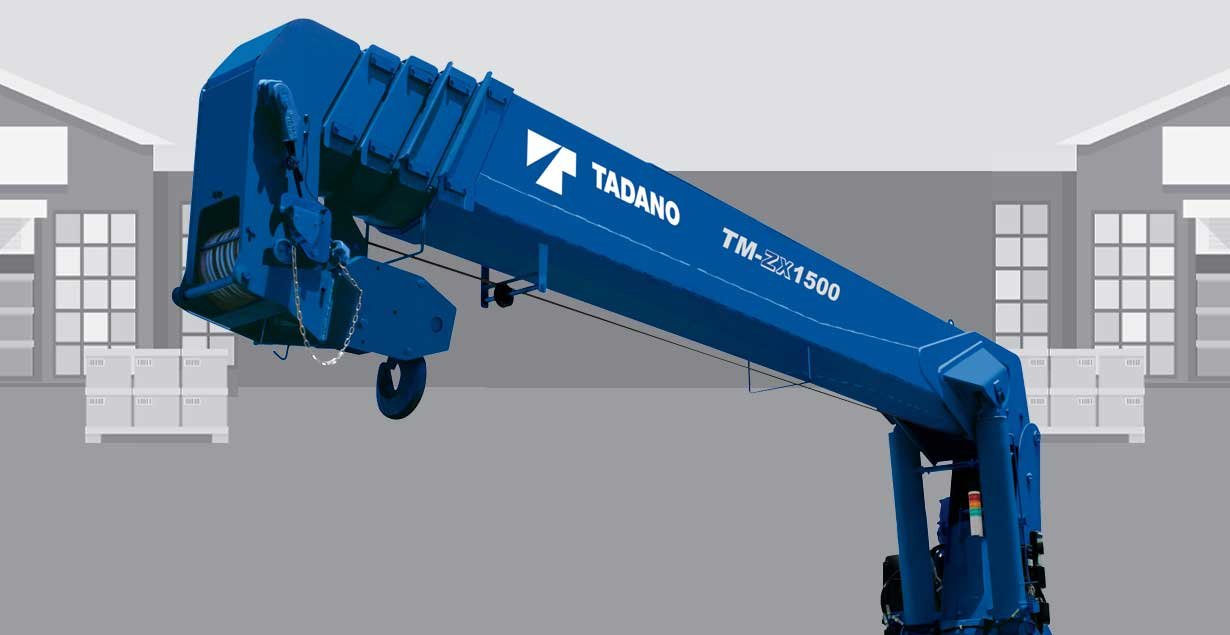
Tadano represents one of Japan’s clearest examples of global specialization. Unlike Komatsu and Hitachi, which operate across a broad range of heavy equipment categories, Tadano focuses primarily on cranes, including all-terrain cranes, rough-terrain cranes, truck cranes and crawler cranes. Its equipment is used in construction, energy, infrastructure and heavy industrial projects where high-capacity lifting is required.
Sumitomo Construction Machinery has developed strong capabilities in hydraulic excavators and road construction machinery. The company manufactures excavators for construction and mining applications as well as asphalt pavers used in road development. Its competitive strengths include hydraulic technology, operating efficiency and equipment designed around the productivity requirements of construction projects.
Takeuchi Manufacturing is considerably smaller than Komatsu or Hitachi but has developed a strong international position in compact construction equipment. The company is widely known as a pioneer in mini excavators and compact track loaders. Takeuchi machines are used by small and medium-sized contractors because of their compact dimensions, versatility and ability to operate efficiently in confined construction sites.
Yanmar Construction Equipment has established its position in compact excavators and other compact construction machinery. Yanmar has decades of experience in diesel engines and powertrain technology, providing an important engineering foundation for its construction equipment business. The company is also developing machines with improved fuel efficiency and lower emissions as environmental regulations become more stringent across major markets.
Kato Works has a long history in Japan’s construction machinery industry and is particularly known for mobile cranes, crawler cranes and excavators. Its business is much smaller than that of Komatsu or Hitachi, but its specialization in lifting equipment and construction machinery gives it a distinct position. Crane markets place a strong emphasis on reliability, safety and performance under demanding operating conditions, making long-term engineering experience an important competitive asset.
Sakai Heavy Industries occupies an even more specialized position, focusing primarily on road construction equipment. Its portfolio includes vibratory rollers, soil compactors, asphalt rollers and other machines used in road construction and maintenance. This specialization allows Sakai to compete in a defined market without directly matching the much broader excavator and mining equipment portfolios of larger manufacturers.
The industry map shows that the strength of Japanese heavy equipment manufacturing is not based solely on scale. Komatsu and Hitachi can compete for large mining and construction projects, while Kubota, Takeuchi and Yanmar have developed strong positions in compact equipment. Tadano and Kato have built expertise around cranes, while Sakai focuses on road construction machinery.
This specialization also gives Japanese manufacturers flexibility when expanding internationally. They do not need to dominate every category of heavy equipment to build a global business. Establishing a strong position in one product segment through engineering, reliability, technology and distribution can create a competitive advantage that is difficult for new entrants to replicate.
Asia remains one of the most important regions for these companies’ international expansion. Infrastructure development, mining, industrial parks, data centers, energy projects and real estate construction are generating demand for excavators, dump trucks, cranes, bulldozers and other heavy machinery. Japan’s long-standing commercial relationships across Asia also give its equipment manufacturers access to distributors, contractors, mining companies and industrial partners.
Southeast Asia is particularly significant. Indonesia, for example, has major coal, nickel and mineral industries alongside infrastructure development and industrial projects requiring excavators, dump trucks, cranes, bulldozers and supporting equipment. This creates opportunities for Japanese manufacturers to sell machinery while also generating recurring revenue from spare parts, maintenance, digital services and after-sales support.
Technology is also reshaping competition in the industry. Heavy equipment manufacturers increasingly sell not only machines but also monitoring systems, fleet management platforms, automation and predictive maintenance solutions. Komatsu and Hitachi, for example, have developed digital technologies that allow mining companies to monitor fleets and improve the productivity of their operations.
Electrification is becoming another major competitive arena. Emissions regulations in North America, Europe and parts of Asia are encouraging manufacturers to develop electric excavators, hybrid equipment and more efficient powertrain systems. This creates opportunities for Japanese companies with long-standing expertise in engines, hydraulics, batteries, electronics and industrial machinery.
Competition from Chinese manufacturers is also becoming increasingly important. Companies such as Sany, XCMG and Zoomlion have developed into global players with competitive pricing and rapidly expanding international distribution networks. Japanese manufacturers are responding through engineering quality, reliability, fuel efficiency, product specialization and after-sales service.
For investors, the differences between these companies are important. Komatsu and Hitachi offer significant exposure to global mining and construction, Tadano provides exposure to cranes and heavy lifting projects, while Kubota, Takeuchi and Yanmar have stronger exposure to compact equipment. As a result, changes in global construction and infrastructure spending do not affect every Japanese manufacturer in the same way.
The expansion of these companies also demonstrates how Japan continues to maintain a strong position in high-value manufacturing. Japanese manufacturers do not always compete on the basis of the largest production volumes. Instead, they combine engineering, reliability, hydraulic technology, automation, engines, electronics and global service networks to remain competitive against manufacturers from the United States, Europe, South Korea and China.
These 10 companies ultimately demonstrate one defining characteristic of Japan’s heavy equipment industry: specialization is part of the global strategy. Komatsu and Hitachi compete at scale, Kobelco has strengths in excavators and cranes, Kubota and Takeuchi focus heavily on compact equipment, Tadano and Kato specialize in cranes, Sumitomo combines excavators with road machinery, Yanmar has a strong position in compact construction equipment, and Sakai focuses on road construction machinery. With different product strengths, they continue to expand into markets where construction, mining, energy and infrastructure investment are growing around the world.