
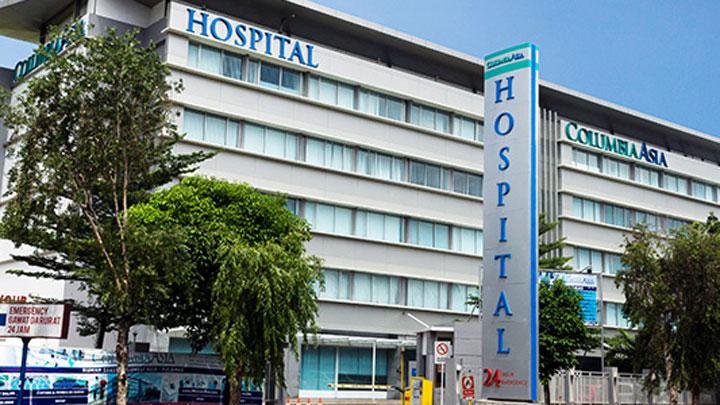
KUALA LUMPUR — Hong Leong Group and US private-equity firm TPG have spent seven years turning a US$1.2 billion acquisition of Columbia Asia’s Southeast Asian hospitals into a regional healthcare platform that now spans Malaysia, Indonesia and Vietnam. The partnership began in 2019 when the two investors agreed to acquire Columbia Asia Hospitals’ Southeast Asian operations, giving them 17 hospitals and one clinic across the three countries. At the time, the business operated 18 healthcare facilities with 1,494 beds and had nine projects under development that were expected to add another 898 beds.
The transaction gave Hong Leong and TPG an established platform from which to consolidate Southeast Asia’s fragmented private healthcare market rather than building a hospital network from scratch. Columbia Asia’s model was centered on relatively compact hospitals, generally with no more than 200 beds per facility, targeting the region’s expanding middle-income population. Its clinical portfolio included general surgery, pediatrics, obstetrics and gynecology, orthopedics, oncology, cardiology, neurosurgery and intensive care. The strategy subsequently shifted toward combining secondary hospitals with larger tertiary and specialist facilities.
The biggest expansion came with the acquisition of Ramsay Sime Darby Health Care for RM5.7 billion in cash. The transaction brought seven hospitals into the platform, comprising four in Malaysia and three in Indonesia, and significantly increased the group’s exposure to tertiary healthcare. Ramsay Sime Darby was a 50:50 joint venture between Malaysia’s Sime Darby Bhd and Australian private hospital operator Ramsay Health Care Ltd. The acquisition was one of the largest hospital transactions in Southeast Asia and became the foundation for a much broader consolidation of healthcare assets.
Asia OneHealthcare subsequently expanded its specialist footprint by acquiring five super-specialty hospitals in Malaysia from TE Asia Healthcare Partners. The facilities included ALTY Orthopaedic Hospital, Beacon Hospital, Cardiac Vascular Sentral Kuala Lumpur, Hospital Picaso and Northern Heart Hospital Penang. The move added exposure to orthopedics, oncology, cardiovascular medicine and other higher-acuity services. It also brought together assets associated with TPG, TE Asia Healthcare Partners and Hong Leong under a single healthcare platform.
In September 2024, Columbia Asia Healthcare was renamed Asia OneHealthcare Sdn Bhd following the consolidation. The company said the enlarged platform would provide secondary, tertiary, quaternary and super-specialty healthcare services across Malaysia, Indonesia and Vietnam. A hospital-bed tally at the time put the combined network at 4,275 beds, including 2,887 beds in Malaysia. That represented an almost threefold increase in bed capacity from the 1,494 beds operated when Hong Leong and TPG acquired Columbia Asia’s Southeast Asian business in 2019.
The financial profile of the business has also changed materially as the platform expanded. Asia OneHealthcare reported revenue of RM3.55 billion for the financial year ended March 2025, compared with RM1.85 billion a year earlier, according to Malaysian corporate filings cited by The Edge. The company reported an after-tax loss of RM428.15 million in fiscal 2025, compared with a profit of RM155.39 million in fiscal 2024. Its total assets stood at RM12.33 billion at the end of March 2025, while liabilities were RM3.81 billion.
The earnings volatility highlights the financial consequences of rapid consolidation. Asia OneHealthcare’s strongest result in the previous five-year period came in the fiscal year ended March 2023, when it recorded RM238.85 million in after-tax profit from RM1.27 billion of revenue. In fiscal 2024, revenue rose to RM1.85 billion while net profit reached RM155.39 million. The subsequent jump in revenue to RM3.55 billion in fiscal 2025 coincided with the enlarged asset base and integration of the newly acquired businesses, while the group moved into a loss.
Hong Leong and TPG are not the only investors behind the enlarged platform. Asia OneHealthcare also counts the Abu Dhabi Investment Authority and Malaysia’s Employees Provident Fund among its shareholders, according to reports on the group. The broader investor base gives the platform access to institutional capital as it moves from an acquisition-driven phase toward integration and potentially a public-market structure. TPG has been evaluating strategic options for the business, including a sale and an initial public offering.
The IPO option has become more concrete in 2026. TPG appointed Malayan Banking Bhd and UBS Group AG to advise on strategic options for Asia OneHealthcare, including a potential listing, according to people familiar with the matter cited by Bloomberg. In September, reports said the company had confidentially submitted an application to Malaysia’s Securities Commission for a possible listing of the hospital assets. The proposed offering could raise as much as RM10 billion, although the size, timing and eventual completion of the IPO remain subject to the regulatory and shareholder process.
The potential listing could value Asia OneHealthcare at around RM30 billion, according to earlier reports, making the transaction a potentially significant monetization event for TPG and its investment partners. The proposed offering would also arrive as Malaysia’s IPO market has attracted renewed healthcare interest, with Sunway Healthcare Holdings among the country’s largest recent listings. Bloomberg data cited by The Edge showed Malaysian first-time share sales had raised about US$1.5 billion, or RM6.07 billion, in 2026, with more than half coming from Sunway Healthcare.
The scale of the transformation is significant when measured against the original investment. Hong Leong and TPG entered the business in 2019 with 17 hospitals and one clinic acquired for about US$1.2 billion, while the enlarged Asia OneHealthcare platform now operates more than 20 hospitals and has more than 4,000 beds across Southeast Asia, depending on the definition of facilities included. The company has retained Columbia Asia hospitals in its network while adding major tertiary and specialist assets through acquisitions. The expansion has effectively changed the business from a relatively focused hospital chain into a multi-tier healthcare platform.
For Hong Leong and TPG, the next stage will test whether the acquisition-led strategy can translate into sustainable earnings growth and a public-market valuation. The platform has increased revenue substantially and expanded its clinical footprint, but the RM428.15 million net loss reported for fiscal 2025 shows the cost and complexity of integrating a much larger hospital network. If the proposed IPO proceeds, investors will have a clearer view of the group’s earnings, assets, debt and valuation after years of private ownership and consolidation. For Hong Leong, TPG and their institutional partners, Asia OneHealthcare has evolved from a US$1.2 billion Southeast Asian hospital acquisition into a potential multibillion-ringgit public healthcare company. (editor)
