
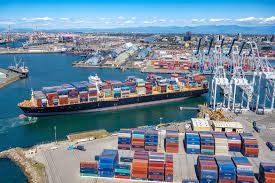
Mexico became the largest supplier of goods to the United States in 2025, overtaking China, which for decades had been one of the world’s largest sources of US imports. Data from the U.S. Census Bureau show that US goods imports from Mexico reached approximately US$534.3 billion in 2025. The figure places Mexico well ahead of China and highlights a major shift in the structure of global supply chains.
The United States imported approximately US$3.41 trillion worth of goods from around the world in 2025. Mexico accounted for about US$534.3 billion of that total, or nearly 16 percent of all US goods imports. Canada followed with approximately US$381.9 billion, while China ranked third with about US$308.7 billion.
China’s position has changed significantly. US goods imports from China totaled approximately US$308.65 billion in 2025, while US exports to China were about US$105.98 billion. That left the United States with a goods trade deficit of approximately US$202.67 billion with China during the year.
Mexico, meanwhile, recorded US imports of approximately US$534.31 billion, while US exports to Mexico reached about US$337.28 billion. The resulting US goods trade deficit with Mexico was approximately US$197.03 billion in 2025, highlighting the enormous scale of bilateral trade between the two economies.
The shift reflects the growing importance of Mexico in North American manufacturing networks. Its geographic proximity to the US allows companies to manufacture goods closer to their final customers than they would if production were concentrated entirely in Asia. Cross-border supply chains also allow components to move between the United States and Mexico multiple times before finished products reach consumers.
China remains a manufacturing powerhouse, but its direct trade relationship with the United States has changed. Monthly data showed sharp declines in US imports from China during parts of 2025, including approximately US$18.9 billion in June before imports recovered during the second half of the year. Despite remaining a major supplier, China ended the year well below Mexico in terms of US goods imports.
In Asia, one of the most significant developments came from Vietnam. The United States imported approximately US$193.88 billion worth of goods from Vietnam in 2025, while US exports to Vietnam totaled about US$15.60 billion. The resulting US goods trade deficit with Vietnam reached approximately US$178.28 billion, a new record.
Taiwan also ranked among America’s largest suppliers. US goods imports from Taiwan reached approximately US$201.37 billion in 2025, putting the island ahead of Vietnam and behind only Mexico, Canada and China among the largest suppliers. US exports to Taiwan totaled approximately US$54.76 billion, leaving a goods trade deficit of about US$146.61 billion.
The changing trade map shows that global supply-chain diversification is not producing a single geographic winner. Mexico is benefiting from the integration of North American manufacturing, Vietnam from expanding Asian manufacturing networks, while Taiwan has a particularly important role in technology-related trade. Each represents a different model of supply-chain specialization.
Japan remains an important supplier to the United States. US goods imports from Japan reached approximately US$145.84 billion in 2025, while US exports to Japan were about US$81.39 billion. The resulting US goods trade deficit with Japan stood at approximately US$64.45 billion.
The Japanese figures become particularly significant when viewed alongside the changing strategies of Japanese companies in China. For decades, Japanese manufacturers built factories and supplier networks in China to serve both the Chinese market and global customers. Rising production costs, stronger Chinese competitors, geopolitical risks and the need to diversify supply chains are giving Japanese companies more reasons to establish production capacity across multiple countries.
South Korea was another major US supplier. US goods imports from South Korea reached approximately US$125.55 billion in 2025, while US exports to South Korea were about US$69.07 billion. The resulting US goods trade deficit with South Korea was approximately US$56.48 billion.
Germany ranked ahead of Japan in terms of US goods imports in 2025, with approximately US$155.83 billion. US exports to Germany reached about US$82.82 billion, producing a goods trade deficit of approximately US$73.01 billion. The figures show that supply-chain restructuring is not limited to Asia but is also reshaping trade between the United States and Europe.
Indonesia remains significantly smaller than Mexico, China, Taiwan and Vietnam as a supplier to the US market, but bilateral trade is substantial. U.S. Census Bureau data show that US goods imports from Indonesia reached approximately US$34.64 billion in 2025, while US exports to Indonesia were about US$10.84 billion. The US goods trade deficit with Indonesia therefore reached approximately US$23.80 billion.
For Indonesia, the numbers point to considerable room for expansion in global supply chains. Indonesia’s exports to the United States remain only a fraction of the value of US imports from Mexico. That gap illustrates the potential for Indonesia to expand its role in manufacturing and in the supply networks of multinational companies.
Competition for new manufacturing investment is increasingly regional. Multinational companies can consider Mexico as a production base for North America, Vietnam as a manufacturing hub in Asia, India for large-scale production and market access, and Indonesia for a combination of domestic market potential, resources and manufacturing capacity. Location decisions are no longer determined simply by labor costs, but also by tariffs, market access, infrastructure, energy, workforce availability, raw materials and supply-chain resilience.
For Japanese companies, this changing landscape creates new strategic options. As production becomes less concentrated in China, companies can build networks linking Japan, China, Vietnam, Indonesia, India, Mexico and the United States. Under this model, different stages of production can be located in different countries according to their respective competitive advantages.
Mexico demonstrates how geographic proximity can reshape trade flows on a massive scale. At US$534.31 billion, US goods imports from Mexico in 2025 were approximately US$225.66 billion higher than imports from China. The difference illustrates the scale of North American economic integration.
The data do not mean that global companies have abandoned China. Imports of US$308.65 billion still make China one of America’s largest suppliers. What the figures demonstrate is a more diversified US import structure, with Mexico, Vietnam, Taiwan and other economies taking increasingly important roles in different parts of global supply chains.
The result is a new map of global trade. The United States remains one of the world’s largest consumer and industrial markets, but its supplier network is becoming more geographically diversified. Mexico has emerged as the largest goods supplier, China remains a manufacturing giant, Taiwan has a major role in technology, Vietnam is expanding rapidly as an Asian manufacturing base, and countries such as Indonesia still have significant room to increase their participation.
For Indonesian businesses, the 2025 trade figures point to a concrete opportunity. The competition for global investment and supply-chain capacity is taking place simultaneously, as Japanese, Korean, Chinese, American and European companies determine where to locate their next production facilities. Countries that can combine market access, competitive costs, infrastructure, raw materials and a predictable business environment will have a greater opportunity to become part of the next generation of global supply chains.
