


(Tokyo) — For much of the past decade, the global automotive industry treated the electric vehicle as an inevitable destination, but Japan’s largest carmakers have increasingly chosen a more cautious route. Toyota, Honda and Nissan continue to invest billions of dollars in batteries, electric drivetrains and software, yet their strategies increasingly emphasize hybrids, regional product planning and multiple powertrain technologies rather than a rapid transition to battery-electric vehicles alone. The contrast is particularly visible against Chinese manufacturers such as BYD, Geely and Chery, which have moved aggressively to expand electric and plug-in hybrid vehicles at home and overseas. The difference reflects less a rejection of electrification than a fundamentally different assessment of market demand, manufacturing economics and the risks of moving too quickly.
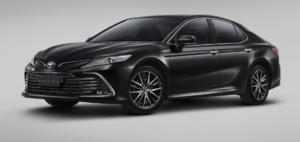
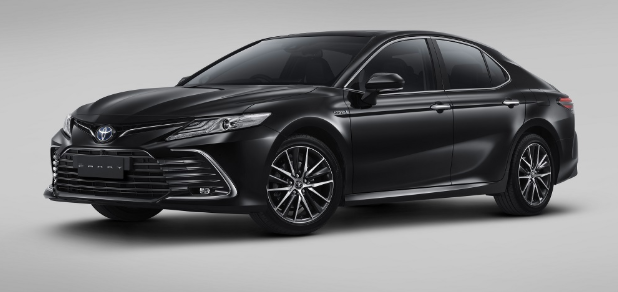
Toyota remains the clearest example of Japan’s multi-pathway philosophy. The world’s largest automaker by vehicle sales has repeatedly said it will develop battery-electric vehicles, hybrids, plug-in hybrids, hydrogen fuel-cell vehicles and conventional powertrains according to the conditions of individual markets. Toyota previously announced plans to launch 10 new battery-electric models by 2026 and reach annual global BEV sales of 1.5 million units, while simultaneously maintaining a broad hybrid portfolio. The company argues that the appropriate mix depends on electricity infrastructure, customer demand, energy sources and local economic conditions rather than on a single global timetable for replacing internal-combustion engines.
Honda has moved even more visibly toward a pragmatic approach after reassessing the pace of global EV adoption. In May 2025, Honda said its global EV sales ratio in 2030 would fall below its previously announced target of 30% because of a slowdown in the EV market. At the same time, Honda set a target of selling 2.2 million hybrids by 2030, compared with total automobile sales of more than 3.6 million units. The company also plans to introduce 13 next-generation hybrid models globally between 2027 and 2030, making hybrids a central part of its strategy during what it describes as the transition toward broader EV adoption.
That recalibration is significant because Honda had previously positioned itself for a faster EV transition. Its earlier strategy called for EVs and fuel-cell vehicles to account for more than 30% of global sales by the fiscal year ending March 2031. Honda also planned to launch seven Honda 0 Series EV models globally by 2030, beginning in North America in 2026. The company has not abandoned those programs, but its revised strategy places greater weight on hybrids, intelligent vehicle technology and flexibility in allocating capital as market conditions change.
Nissan occupies a different position because it was one of Japan’s earliest mass-market EV pioneers. The Leaf, introduced in 2010, gave Nissan a first-mover position that many competitors subsequently challenged. Under its Ambition 2030 strategy, Nissan initially planned to introduce 23 electrified models, including 15 EVs, and invest ¥2 trillion over five years in electrification. The company later increased its planned product pipeline to 27 electrified models, including 19 EVs, with an electrification sales mix of more than 55% globally by fiscal 2030.
Yet Nissan’s current strategy also shows how quickly the economics of the EV market have changed. Under its latest Re strategy, the company says China will serve as a global innovation and export hub, using local speed, cost discipline and advanced battery-electric and hybrid technology. Nissan is targeting annual sales of 1 million units in China by fiscal 2030 and is strengthening its local partnerships to accelerate product development. In other words, even a Japanese automaker with a long EV history now recognizes that Chinese operations must compete on development speed and cost as much as on traditional engineering credentials.
The central difference with many Chinese manufacturers is the speed at which the domestic market forced companies to adapt. China has become the world’s largest EV market and a highly competitive laboratory for batteries, vehicle software, connected services and low-cost manufacturing. Chinese automakers have had to respond to rapidly changing consumer preferences and intense price competition, pushing development cycles shorter and encouraging manufacturers to integrate batteries, software, electric motors and vehicle electronics more tightly. Toyota itself has recently faced pressure in China as local brands such as BYD, Geely and Chery gain market share and foreign manufacturers confront an increasingly difficult joint-venture model.
Cost is another major dividing line. A battery-electric vehicle requires a large battery pack, and batteries remain one of the most expensive components of an EV. Honda’s previous strategy estimated that batteries accounted for about 40% of EV costs and targeted a 20% reduction in battery costs through a comprehensive value chain. Chinese manufacturers benefit from a domestic battery ecosystem that includes some of the world’s largest battery producers and extensive local supply chains, allowing them to compete aggressively on vehicle pricing and product launches. Japanese manufacturers, by contrast, are trying to protect existing manufacturing systems built over decades around engines, transmissions, hybrid systems and global supplier networks.
Japan’s own domestic market also provides little incentive for an abrupt transition to battery-electric vehicles. The country has a high proportion of compact cars, limited parking space in major cities and a mature hybrid market developed largely by Toyota and Honda. Japanese consumers have therefore had access to lower-emission vehicles without needing to make the full transition to battery-electric cars. The result is a market in which hybrids remain commercially relevant while EV adoption has developed more slowly than in China and some parts of Europe.
The infrastructure question is equally important. Battery-electric vehicles depend on charging networks, grid capacity, electricity generation and the availability of convenient charging locations. Japan’s geography, housing patterns and urban infrastructure create different requirements from China’s rapidly expanding urban charging ecosystem. Japanese manufacturers therefore argue that a technology mix can provide lower-carbon transportation in markets where EV infrastructure is not yet sufficiently developed.
Toyota’s hybrid advantage is particularly difficult to replicate from scratch. The company has spent more than two decades refining hybrid technology since the Prius became a global symbol of electrified mobility. Its cumulative hybrid sales have reached tens of millions of vehicles, creating engineering expertise, supplier relationships and manufacturing economies that can be leveraged across multiple markets. That installed technological base gives Toyota an economic reason to continue improving hybrids even while developing the next generation of battery-electric vehicles.
The Chinese approach has developed under different competitive conditions. BYD, for example, began as a battery manufacturer before becoming a major automaker, giving it a different relationship with the battery supply chain from traditional carmakers. The company’s portfolio spans battery-electric and plug-in hybrid vehicles, allowing it to sell electrified cars across different price points. Chinese competitors have also been willing to compete aggressively on price, introduce frequent model updates and incorporate smartphone-style software features into vehicles, areas where Japanese manufacturers traditionally moved through longer product cycles.
The software dimension may prove as important as the powertrain itself. Chinese consumers have become accustomed to vehicles with large digital displays, connected services, frequent software updates and advanced driver-assistance systems. Japanese manufacturers are now increasing investment in software-defined vehicles, artificial intelligence and advanced driver assistance, but they are doing so while protecting established quality, safety and manufacturing standards. Honda, for example, has identified intelligent technology and next-generation ADAS as among the most critical areas of future automotive competition.
This creates a strategic paradox for Japan’s automakers. Moving too slowly risks losing market share in China and other markets where EV adoption is accelerating, but moving too quickly could expose them to enormous capital requirements before demand and profitability are sufficiently established. The industry has already seen how quickly EV pricing can change when manufacturers compete for volume. Japanese companies therefore increasingly favor staged investment, regional strategies and partnerships rather than committing all capital to a single technology at once.
China is also changing from being merely a sales market into a source of automotive technology. Nissan’s current strategy explicitly describes China as a global innovation and export hub, while Toyota has been reassessing its joint-venture structure as local Chinese manufacturers become more competitive. This is a major change from the previous era when Japanese, European and American manufacturers supplied technology and brands into China while local partners primarily provided manufacturing and market access. Today, Chinese operations can increasingly become sources of software, batteries, vehicle platforms and cost-efficient engineering for global markets.
The competitive pressure is visible outside China as well. Chinese brands are expanding into Europe, Southeast Asia, Latin America and the Middle East, often using EVs and plug-in hybrids as their entry products. Japanese automakers still possess enormous advantages in brand recognition, dealer networks, manufacturing quality and after-sales infrastructure, but Chinese manufacturers are narrowing the gap in battery technology, digital features and product development speed. That competition is forcing Japanese companies to reconsider how much of their traditional advantage can remain relevant in an increasingly software- and battery-driven industry.
The Japanese strategy therefore should not be interpreted simply as resistance to electric vehicles. Toyota continues to invest in BEVs and next-generation batteries, Honda is launching its 0 Series and Nissan remains committed to a substantial EV pipeline. What has changed is the assumption that battery-electric vehicles will expand at the same pace across every market. The companies increasingly see electrification as a portfolio decision shaped by local economics, infrastructure, consumer behavior and government policy.
For investors, the difference between the Japanese and Chinese approaches is ultimately a question of capital allocation. Chinese manufacturers have accepted higher competitive intensity and faster product cycles in exchange for scale, while Japanese manufacturers are attempting to preserve returns from profitable existing technologies while building new EV capabilities. Honda’s decision to target 2.2 million hybrid sales by 2030 is a clear example of using an established technology to generate volume and cash flow while the EV business matures.
The transition is also reshaping corporate alliances. Nissan is relying on partnerships to improve development speed and cost competitiveness, while Honda and other Japanese manufacturers are seeking collaboration in batteries, software and components. These partnerships reflect an industry in which no automaker can easily control the entire technology stack. Battery chemistry, semiconductors, software, charging infrastructure and autonomous-driving systems require investment on a scale that makes cooperation increasingly attractive.
The ultimate contest may therefore not be between gasoline cars and EVs, but between different industrial models. Japan’s model is built around decades of manufacturing discipline, hybrid technology, supplier relationships and incremental engineering, while China’s model has been shaped by battery integration, aggressive price competition, software development and exceptionally fast product cycles. Both approaches are evolving, and the dividing line is becoming less rigid as Japanese manufacturers adopt Chinese technology and Chinese companies build global manufacturing and distribution networks.
What is clear is that Japan’s automotive giants are no longer treating the EV transition as a race in which the fastest move to battery-electric vehicles automatically produces the strongest business. Toyota’s multi-pathway strategy, Honda’s renewed emphasis on hybrids and Nissan’s decision to use China as an innovation and export hub all point toward a more complicated industrial transition. The next phase of the global automobile industry will be determined not simply by who sells the most EVs, but by which manufacturers can combine battery technology, software, manufacturing cost, product speed and profitability at global scale. (editor)