
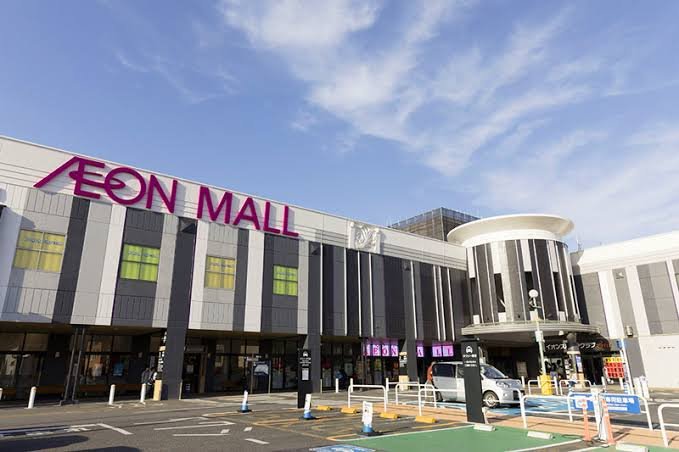
TOKYO — AEON Co., Japan’s largest retail group, is accelerating its expansion across Asia, with Vietnam emerging as the centerpiece of a five-year strategy that combines new shopping malls, supermarkets, supply-chain development and digital financial services.
The scale of the push has become clearer in recent months. AEON plans to open its ninth and 10th shopping malls in Vietnam in October and November 2026, while it has already opened its eighth mall in the country in Da Nang in July. The company has also decided to develop another mall in Da Nang and its first mall in Vietnam’s Bac Ninh Province.
Vietnam now stands apart from AEON’s other overseas markets. Under its medium-term strategy through fiscal 2030, the Japanese retailer plans to allocate about 60% of its ASEAN investment to Vietnam and eventually expand its shopping-mall network to 30 locations. AEON also expects revenue from its Vietnamese operations to exceed ¥300 billion by fiscal 2030.
The target represents a substantial increase from AEON’s current footprint. As of 2025, the group operated seven shopping malls and 46 general-merchandise stores and supermarkets in Vietnam, according to AEON Financial Service, while the broader AEON network in the country had 11 group companies. AEON has said it wants to more than triple its store network in Vietnam by 2030.
The latest mall openings show how AEON is moving beyond Vietnam’s two largest metropolitan markets. AEON MALL Da Nang Thanh Khe became the group’s first mall in Da Nang in July 2026, while AEON MALL Thanh Hoa is scheduled to open in October and AEON MALL Ha Long in November. Both new malls extend the network into regional markets rather than concentrating solely on Hanoi and Ho Chi Minh City.
AEON is also building a pipeline beyond those three projects. The company has announced a second Da Nang mall, AEON MALL Da Nang Hoa Xuan, and its first mall in Bac Ninh Province. Planned projects in Vietnam also include AEON MALL Tran Bien in Dong Nai. The pattern suggests that AEON is using a regional-city strategy to build market density rather than relying exclusively on large metropolitan shopping centers.
The strategy is not limited to large malls. AEON has been expanding through multiple retail formats, including supermarkets and smaller stores, while developing local products and supply chains. AEON Vietnam has described its approach as a combination of vertical and horizontal expansion, development of an AEON ecosystem and initiatives designed around local communities.
That ecosystem is increasingly important to AEON’s Asian strategy. The group is trying to connect physical stores with customer data, loyalty programs, payments and financial services rather than treating each supermarket or mall as a standalone retail asset. In Vietnam, AEON Financial Service introduced the group’s WAON POINT loyalty system and has moved into consumer finance, including installment payments and personal loans.
AEON Financial Service has separately identified Malaysia, Vietnam and Cambodia as priority investment countries for its fiscal 2026-2030 plan. It plans to build a “Retail x Finance x Digital” model in those markets, linking retail customer touchpoints with payments, lending, smartphone applications, data and artificial intelligence. The company has earmarked ¥110 billion for overseas investment over five years, with Malaysia, Vietnam and Cambodia among the priority markets.
Indonesia is another important part of the physical retail expansion. AEON MALL opened AEON MALL BSD CITY in Tangerang in 2025, following the opening of AEON MALL Delta Mas in Bekasi in 2024. AEON Indonesia has also expanded its supermarket network, opening its first store in Central Java in Semarang in August 2025, its 11th supermarket, followed by a 13th store at Pakuwon Mall Surabaya in December and a 14th store at Emporium Pluit Mall in North Jakarta in May 2026.
China remains another major overseas market, but AEON is approaching it more selectively. AEON MALL said in April 2026 that it was accelerating a “select and concentrate” strategy in China, renovating existing malls while directing new investment toward central and eastern regions. The group is developing a new mall in Kunshan, Jiangsu, and another project in Xiaogan, Hubei, scheduled for spring 2028.
The Chinese strategy illustrates an important change in AEON’s international expansion. Rather than simply increasing the number of properties, the company is looking at investment efficiency, regional growth and the performance of existing malls. AEON MALL said it plans to review its existing Chinese portfolio while concentrating growth investment in areas including Hubei and other higher-growth inland markets.
Cambodia represents a different model. AEON has established three shopping malls in Phnom Penh and has added logistics infrastructure in Sihanoukville, where AEON MALL Cambodia Logi Plus operates a logistics center. The company has therefore used Cambodia not only as a retail market but also as a platform for logistics and regional supply-chain activity.
Myanmar remains on AEON MALL’s development list, although the timing is less certain. The company continues to list a planned AEON MALL Dagon Seikkan in Yangon, while the project has been affected by the country’s political and economic conditions. Unlike Vietnam, where AEON is actively announcing multiple new openings, Myanmar should therefore be viewed as a longer-term pipeline project rather than a comparable near-term expansion market.
The geographical footprint is already substantial. As of the end of August 2026, AEON MALL operated 202 shopping malls, including 162 in Japan and 40 overseas. Its overseas mall network spans China and several ASEAN markets, giving AEON a physical platform from which to expand retail, services, digital products and financial businesses.
AEON’s broader group strategy reinforces the shift toward Asia. In May 2026, the company announced a fiscal 2026-2030 medium-term plan targeting ¥15 trillion in operating revenue, ¥530 billion in operating profit, a 9% return on equity and ¥1.1 trillion in EBITDA by fiscal 2030. Vietnam was explicitly identified as one of the group’s growth drivers alongside Health & Wellness and Developer & Entertainment.
The strategy also reflects the changing economics of Japanese retail. AEON is trying to turn the scale accumulated through stores, malls, suppliers and customer relationships into higher-return businesses. Its medium-term plan calls for greater use of digital technology and AI, while restructuring lower-return businesses and improving cash generation and capital efficiency.
For AEON, the most important competitive advantage may therefore be the combination of businesses rather than the supermarket itself. A customer entering an AEON mall can generate revenue for retailers and tenants while also becoming part of a loyalty program, payment network and potentially a financial-services relationship. In markets such as Vietnam, AEON is attempting to reproduce this ecosystem at much greater scale.
The expansion also gives AEON a way to diversify its growth away from Japan, where the company already has a mature retail footprint. Vietnam offers a particularly attractive combination of population growth, urbanization, rising consumer spending and a still-developing modern retail sector. AEON’s decision to concentrate roughly 60% of its ASEAN investment there indicates how strongly management is prioritizing that opportunity.
By 2030, the shape of AEON’s Asian business could therefore look materially different from today. Vietnam is being built as the group’s largest growth engine, Indonesia is expanding through both malls and supermarkets, China is being managed through selective reinvestment, while Cambodia is developing into a combined retail and logistics platform. The common thread is a move from simply adding stores toward building an integrated retail, property, supply-chain, data and financial-services ecosystem across Asia. (NB)
