
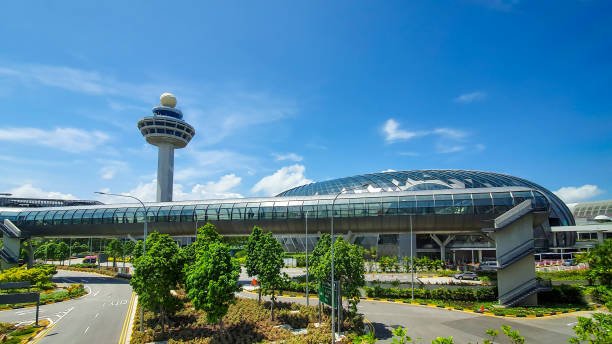
Singapore — Changi Airport has been steadily transforming itself as international air travel returns to high levels. Over the past two years, the changes have extended far beyond new buildings and facilities, reaching immigration systems, digital services, airport operations, energy use, baggage handling and the overall passenger experience.
For international travelers, many of these changes have become increasingly visible since 2024. Changi Airport handled 67.7 million passengers in 2024, while passenger traffic rose to 68.4 million in the 2024/25 financial year, about 9% higher than the previous year. The airport now connects Singapore with around 170 cities through nearly 100 airlines and more than 7,200 weekly flights.
1. Immigration is moving toward a passport-free journey
One of the most significant changes has been the expansion of automated immigration clearance. Since 2024, Singapore has expanded biometric immigration technology at Changi, allowing travelers to clear immigration using facial and iris biometrics rather than repeatedly presenting a physical passport.
The system was progressively introduced from August 2024, while automated clearance became available across all four terminals for travelers regardless of nationality. Today, first-time visitors can also use automated clearance without prior enrolment, provided they meet Singapore’s entry requirements and hold an ICAO-compliant passport.
2. Terminal 1 has received a major transit-area refresh
Terminal 1 has also undergone significant improvements. Its refurbished transit area provides more seating and new food and beverage options, addressing one of the most basic needs of passengers spending several hours between flights.
The changes also include more convenient ways to order food. Instead of having to queue at individual outlets, passengers can use centralised ordering services, making the transit experience more convenient during busy periods.
3. Automation is expanding across Terminal 2
Terminal 2 has continued to expand the use of automated check-in and baggage services. The terminal’s major revitalisation project, completed in phases, significantly increased the number of self-service check-in kiosks and automated bag-drop machines.
For international travelers, this means more parts of the departure process can be completed independently. Changi’s FAST system allows eligible passengers to check in at automated kiosks, print baggage tags and drop their bags at automated machines before proceeding to immigration.
4. The Changi App has become a broader digital travel tool
Changi has also expanded the role of its mobile application. In October 2025, Changi Airport Group introduced upgraded features including live flight tracking, real-time updates and information about airports at overseas destinations.
The application can now provide information such as gate and baggage-belt assignments, destination weather and flight-status notifications. Changi also introduced FlightSaver Assurance, which provides benefits to eligible users when a scheduled departure from Singapore is delayed by three hours or more.
5. Changi is bringing driverless vehicles into airport operations
One of the most futuristic changes is taking place away from the passenger terminals. Changi has been testing autonomous tractors to transport baggage and equipment around the airside area.
The programme began with trials in December 2024. By January 2026, the autonomous tractors had completed more than 20,000 kilometres across about 5,000 test trips, including operations at different times of day and in heavy tropical rain. Changi subsequently launched fully driverless operations and plans to expand the fleet to 24 tractors.
6. Changi is increasing its use of solar power
Another major transformation is happening above the terminals. Changi has been installing a large rooftop solar photovoltaic system as part of its strategy to increase renewable energy and reduce emissions from airport operations.
The airport’s sustainability programme also includes a major expansion of electric ground vehicles. From 2025, all new airside light vehicles, forklifts and tractors are required to be electric, while Changi plans to expand its electric-vehicle charging network to more than 300 charging points.
7. Changi has upgraded its air-cargo infrastructure
The changes are not limited to passenger facilities. In October 2024, Changi opened Changi Nexus One, a refurbished logistics facility at the Changi Airfreight Centre.
The facility incorporates energy-efficiency measures and was designed to achieve Green Mark Platinum Positive Energy Building certification. Changi has also introduced technology to streamline truck docking and cargo collection, helping reduce waiting times in the air-cargo operation.
8. Waste management is becoming more sophisticated
Changi is also experimenting with more systematic waste separation. At selected locations, passengers can separate liquid waste, food waste, plastic bottles, metal cans and non-recyclable materials.
The initiative is designed to improve the quality of recyclable material and increase the amount of food waste that can be processed separately. For an airport handling tens of millions of passengers every year, even relatively small changes in waste management can have a significant cumulative impact.
9. Jewel continues to evolve as part of the Changi experience
Jewel Changi Airport has also continued to introduce new experiences, stores and attractions. The complex has increasingly become an important part of the airport’s wider visitor economy rather than simply a retail facility between the terminals and the city.
During the 2024/25 financial year, Jewel recorded around 81 million visits, an increase of about 5% from the previous year. New retail concepts, restaurants, attractions and entertainment experiences continue to give travelers with longer layovers another reason to spend time at Changi.
For international travelers with several hours between flights, this makes Changi different from a conventional airport where transit time is primarily spent waiting at the gate. Gardens, attractions, restaurants, retail outlets and other experiences allow passengers to turn part of their layover into a destination experience.
10. Changi has started building the next generation of its airport
The biggest transformation is still ahead. Construction of Terminal 5 officially began in 2025 as part of the Changi East development, marking one of Singapore’s largest long-term aviation infrastructure projects.
The first phase of Terminal 5 is designed to handle about 50 million passengers annually and eventually increase Changi’s overall handling capacity to around 140 million passengers. The terminal will incorporate automated people movers, automated baggage systems, artificial intelligence, robotics and other digital technologies.
The new terminal is also being designed around sustainability. Changi says Terminal 5 will be a Green Mark Platinum Super Low Energy building and will include one of Singapore’s largest rooftop solar installations, while its airside infrastructure will be designed to support a largely electric vehicle fleet.
Taken together, these ten changes show a clear direction for Changi Airport. The airport is becoming increasingly automated in its operations, increasingly digital in the passenger journey and increasingly focused on energy efficiency and lower-emission infrastructure.
For international travelers, the most important changes are therefore not limited to Terminal 5. Passport-free immigration, automated baggage services, real-time digital information, driverless airport vehicles, expanded renewable energy and new transit experiences are already changing how passengers move through Singapore’s aviation hub.
