
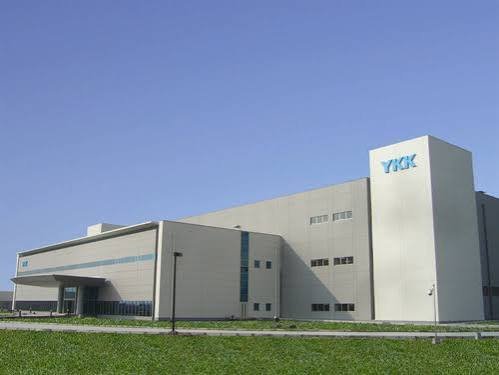
(Jakarta) — There are products so small that they rarely become the focus of attention, yet their presence can determine whether a fashion product works properly. The YKK zipper is one of them. In Indonesia, YKK’s story has lasted for more than five decades, beginning with the establishment of PT YKK Zipper Indonesia in January 1972 as a joint venture between YKK Holding Asia and PT Andityawarman.
The decision to establish a local operation in Indonesia in the early 1970s revealed a strategy that would later become characteristic of YKK’s international expansion. Rather than treating Indonesia simply as a sales market, the Japanese company built local manufacturing capabilities and gradually integrated Indonesia into its broader Asian production network. Its Cimanggis factory began operations in 1973, followed by the Cibitung facility in 1990.
That strategy became increasingly relevant as Indonesia’s garment industry expanded and its export orientation strengthened. YKK Indonesia today manufactures a range of fastening products, from zippers and components to hook-and-loop fasteners, elastic tape, metal notions, yarn and die sets, operating two factories in Cimanggis and Cibitung. The company currently lists approximately 1,290 employees.
This is where YKK’s strategy becomes different from that of a conventional consumer brand. Its customers are largely behind the scenes: apparel manufacturers, footwear companies, bag producers and other manufacturers that require fastening components with precise specifications. By staying close to manufacturing customers, YKK can understand production requirements while building relationships that can last for decades.
Indonesia has characteristics that fit particularly well with this model. The country has a substantial textile and apparel manufacturing base, while a significant portion of Indonesian garment production is connected to international export markets. For YKK, having local operations allows the company to serve manufacturers producing for both domestic and overseas markets.
From Zippers to a Manufacturing Ecosystem
One of the most important elements of YKK’s strategy is its ability to control more of the production process itself. This approach dates back to the company’s early development and has become a defining feature of its global fastening business. YKK is not simply a zipper producer; it has developed machinery, components and manufacturing technologies that support its production system.
For a market such as Indonesia, that approach has strategic consequences. When customers require changes in size, material, color, construction or technical characteristics, the relationship between the component manufacturer and the apparel producer becomes much closer. YKK does not have to depend entirely on finished products shipped from Japan because part of its manufacturing capability is already established locally.
The company’s global scale adds another layer. YKK Group operates across roughly 70 countries and regions, with more than 140 companies and a global workforce of tens of thousands of employees. Its fastening business remains one of the core pillars of the group, alongside its architectural products business.
Yet global scale does not mean that every market is treated according to exactly the same formula. YKK’s regional operations are designed to respond to local market characteristics, customer requirements and production conditions. In Indonesia, that has translated into factories, sales operations and technical capabilities built around the needs of domestic and regional customers.
The decision to maintain manufacturing operations in Indonesia for decades also illustrates how YKK views investment. A factory is not merely a place where products are made; it becomes infrastructure for customer relationships. The longer that facility operates, the more knowledge accumulates around product specifications, manufacturing processes, quality requirements and customer needs.
That is why YKK’s competitive position cannot be measured simply by the price of a zipper. In industrial components, consistency, delivery reliability, product availability and the ability to meet technical specifications can matter as much as the unit price. YKK has built its global fastening business around precisely this combination of manufacturing capability, quality and customer relationships.
Indonesia as Part of an Asian Supply Chain
YKK’s Indonesian operation has gradually evolved from a domestic market presence into part of a wider Asian manufacturing network. The logic is straightforward: locating production close to customers reduces logistical complexity while giving the company greater visibility into changing manufacturing requirements.
That model is becoming increasingly relevant as global manufacturers rethink supply chains. Indonesia offers a combination of a large domestic market, an established manufacturing base, a substantial workforce and proximity to other major Asian production centers. For YKK, this creates an opportunity to connect Indonesian manufacturing customers with a broader regional network.
The company has also invested beyond conventional manufacturing. YKK established a Fastening Experience facility at its Cimanggis complex, creating a space designed to introduce visitors and communities to manufacturing and the technology behind fastening products. Such initiatives show how the company’s local presence extends beyond factories and sales offices.
The next challenge comes from the transformation of the fashion industry itself. Global brands are placing greater emphasis on sustainable materials, while apparel manufacturers are facing increasing pressure to reduce carbon emissions and reliance on virgin resources. YKK has responded by developing products such as NATULON, which incorporates recycled materials.
The shift is already visible at a global level. YKK reported in April 2026 that NATULON zipper products accounted for 56% of its global zipper sales by the end of FY2025, following the company’s broader transition toward recycled materials.
For Indonesia, this creates a new dimension to the local manufacturing strategy. A competitive factory is no longer defined only by its ability to produce large volumes at consistent quality. It also needs to respond to material requirements, sustainability standards and procurement expectations increasingly set by global apparel brands.
When YKK Moved Beyond Zippers
There is another part of YKK’s Indonesian story that is less visible than its zipper business. The group also established a presence in architectural products, developing businesses around aluminum building systems, windows, doors and related architectural solutions.
That expansion demonstrates another element of the YKK strategy: once the company establishes manufacturing capabilities and market relationships in a country, it can use those foundations to develop adjacent businesses. The architectural products business operates in a completely different market from fastening products, but it shares the same emphasis on manufacturing technology, quality control and long-term customer relationships.
YKK AP Indonesia has subsequently developed products for local market requirements, including systems designed to address Indonesia’s climate conditions. Its Indonesian R&D capabilities illustrate an important principle of YKK’s international strategy: global technology becomes more valuable when it is adapted to local conditions.
The result is a business model that combines global technology with local knowledge. Rather than simply exporting Japanese products into Indonesia, YKK has spent decades building an organization capable of understanding Indonesian customers and developing products around their requirements.
From a corporate strategy perspective, the pattern is remarkably consistent. YKK enters a market with manufacturing capabilities, builds customer relationships, expands local production, develops technical expertise and then uses that foundation to introduce new products. It is a strategy that takes time, but the accumulated knowledge and relationships become difficult for competitors to replicate quickly.
The Next Chapter: Digital Manufacturing, Sustainability and Regional Growth
YKK is now entering another phase of that strategy. Under its seventh Mid-Term Business Policy for FY2025 through FY2028, the company has placed greater emphasis on digital transformation, sustainability, human-resource development and stronger customer relationships. Its latest integrated report, released in October 2026, describes the strategy under the theme “Contribute to a Sustainable Society as ONE YKK.”
Digital manufacturing is becoming increasingly important to that agenda. YKK established its Digital Transformation Division in April 2026 as part of an effort to strengthen manufacturing capabilities through digital technologies. The objective is not simply to automate factories, but to create more flexible manufacturing systems capable of responding to changing customer requirements.
The company’s regional investment strategy also points toward continued expansion across Asia. YKK has been investing in manufacturing capacity in markets where textile and apparel production is growing, including Vietnam and India, while strengthening technology and production capabilities across the ASEAN region. In January 2026, for example, YKK announced an $83.6 million expansion of its Nhon Trach factory in Vietnam.
That regional expansion changes the strategic context for Indonesia. Indonesia does not operate in isolation from YKK’s other Asian manufacturing bases. Instead, Indonesian factories form part of a regional network in which production, technology, customers and supply chains increasingly interact across borders.
Sustainability is becoming another competitive dimension. YKK reported that its global NATULON zipper series surpassed 50% of total zipper sales, while the company continues to invest in resource efficiency and lower-carbon manufacturing.
For Indonesia, the implication is significant. More than five decades of local manufacturing have given YKK something that cannot be created simply by opening a new sales office: local production experience, customer relationships, technical knowledge, trained employees and an established industrial footprint. As the apparel, footwear, luggage and related manufacturing industries evolve, those assets can become the foundation for the next phase of YKK’s Indonesian strategy.
More than 50 years after establishing its local fastening business, YKK is still operating according to principles that have defined its international expansion: stay close to customers, maintain manufacturing quality and continuously build technological capabilities. What has changed is the competitive environment, which has moved from simply producing reliable zippers toward creating fastening solutions that are increasingly digital, sustainable and responsive to global supply-chain requirements.
